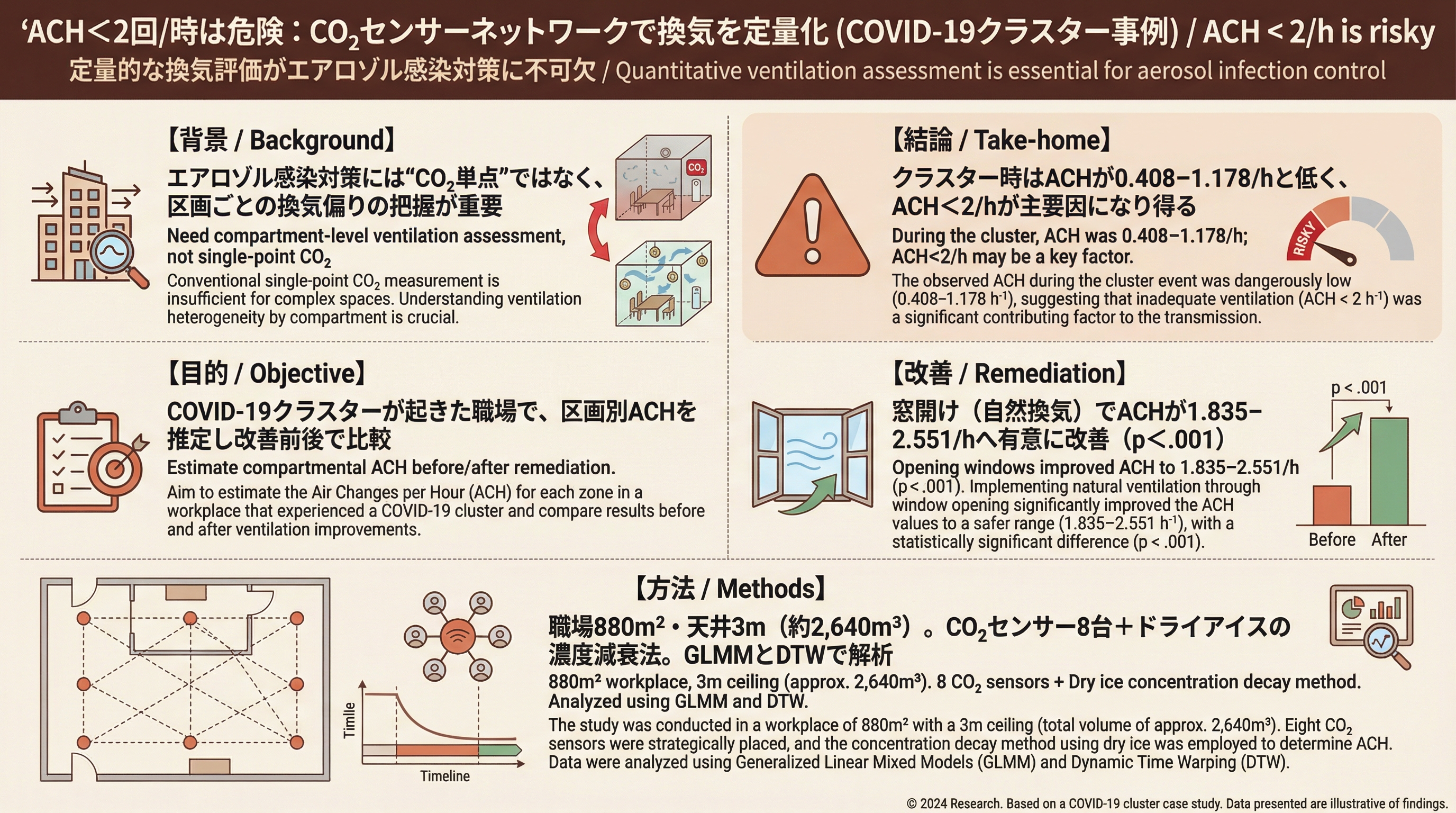
#E0095 Employee: Is my factory workplace good for me? Employer: Is my factory workplace good for my company?

Employee: Is my factory workplace good for me?
Employer: Is my factory workplace good for my company?
We spend majority of our most productive adult lives at our workplaces; our workplaces mainly exist to make profit. A “sick” workplace affects both the employees’ health and the institution’s productivity.
Bangladesh’s ready-made garment (RMG) sector is a major institution employing several individuals. But poor working conditions such as poor lighting, ventilation and extreme heat are common. The heating conditions in Bangladeshi’s factories, which is located in a tropic region, worsen during summer.
In 2022, the authors spoke to workers at two RMG factories in Dhaka to find out whether these workers felt that the heat at the workplace was affecting their health, their productivity at work and whether they were able to get treatment for workplace heat-relatedness illnesses at their workplaces. The authors also spoke to key informants such as RMG factory officials, onsite health workers, government officials, the RMG peak body and non-governmental officials with expertise in industry and workplace issues about what they thought of the factory working conditions, workers welfare and whether heat-related illnesses had affected the country’s garment sector.
Workers felt that the factor heat caused them headaches, made them dizzy, tired and nauseated especially during summer. But key informants had conflicting views and either felt the problem did not exist (as it was not reported by factory managers) or was being blown out of proportion.
On-site health professionals, who were not always present at smaller factories, had observed abnormal changes in blood pressure during summer. Other key informants stated that they had observed that more employees were absent during summer. Factory managers (and workers alike) reported noticing increased fatigue, breaks from work and absenteeism during summer which prevented the factory from attaining its targets.
Although the factories provided water to help reduce the effects of heat, workers were often scolded for taking water breaks and others decided to forgo their water breaks to complete their targets within their shifts. Sometimes workers were not allowed to operate cooling devices themselves and factories would take a long time to repair such cooling devices when they broke down.
Also, women were socially required to put on multiple layers of clothing which made it difficult to work in the factories. A favorable workplace where workers can freely access cooling measures would benefit both the worker and the employer.
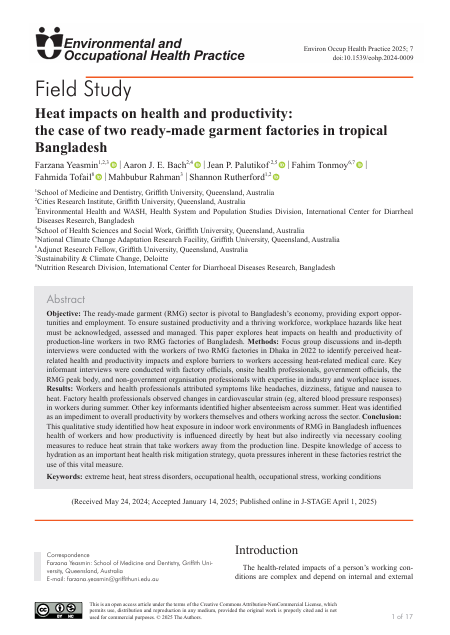
Link to original journal article:
https://www.jstage.jst.go.jp/article/eohp/7/1/7_2024-0009/_article
Title of the paper:
Heat impacts on health and productivity: the case of two ready-made garment factories in tropical Bangladesh
Authors:
Farzana Yeasmin , Aaron J. E. Bach, Jean P. Palutikof, Fahim Tonmoy, Fahmida Tofail, Mahbubur Rahman, Shannon Rutherford