#MR001 When Work Causes Cancer: The Discovery of Occupational Cholangiocarcinoma
When Work Causes Cancer: The Discovery of Occupational Cholangiocarcinoma
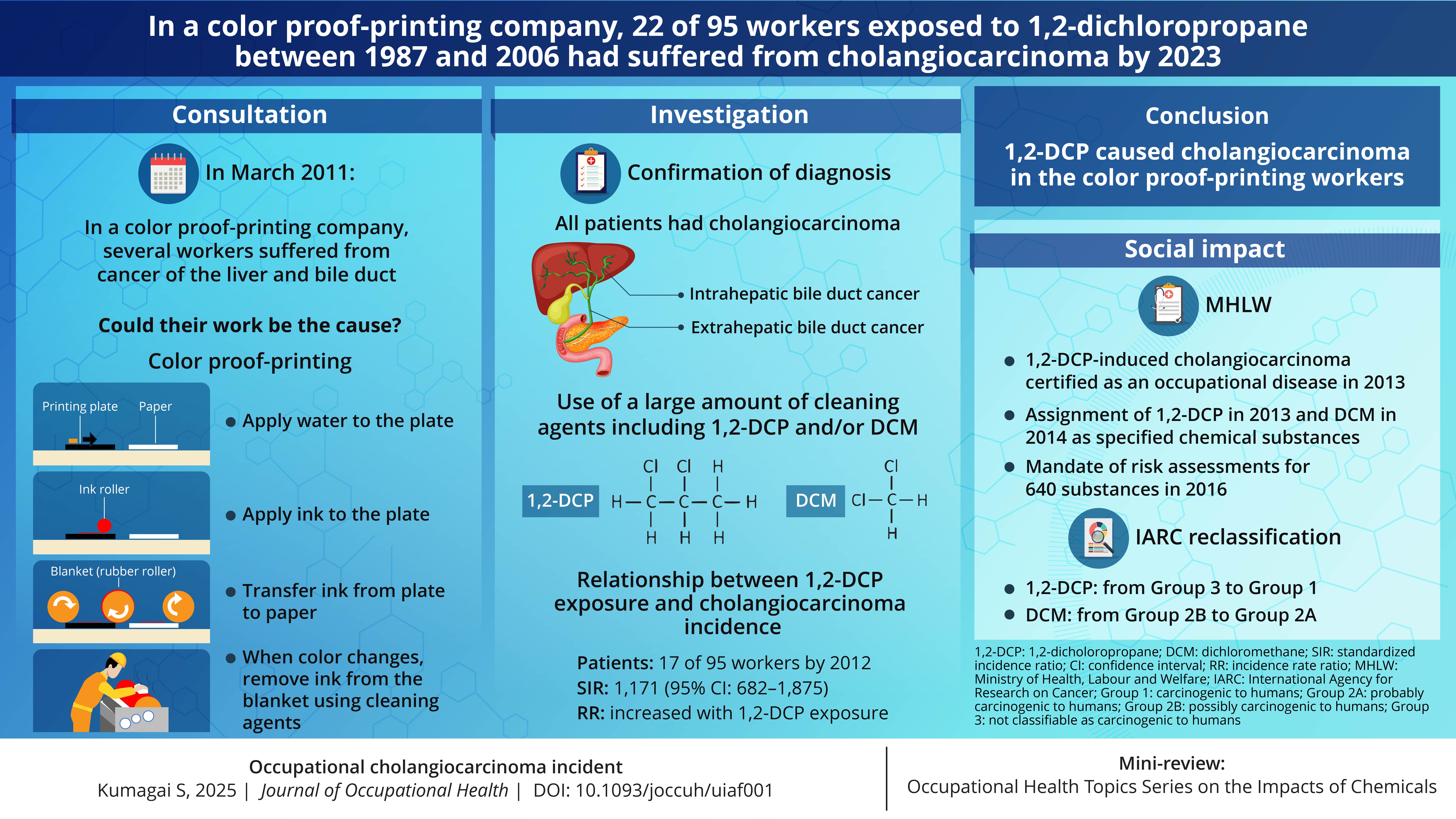
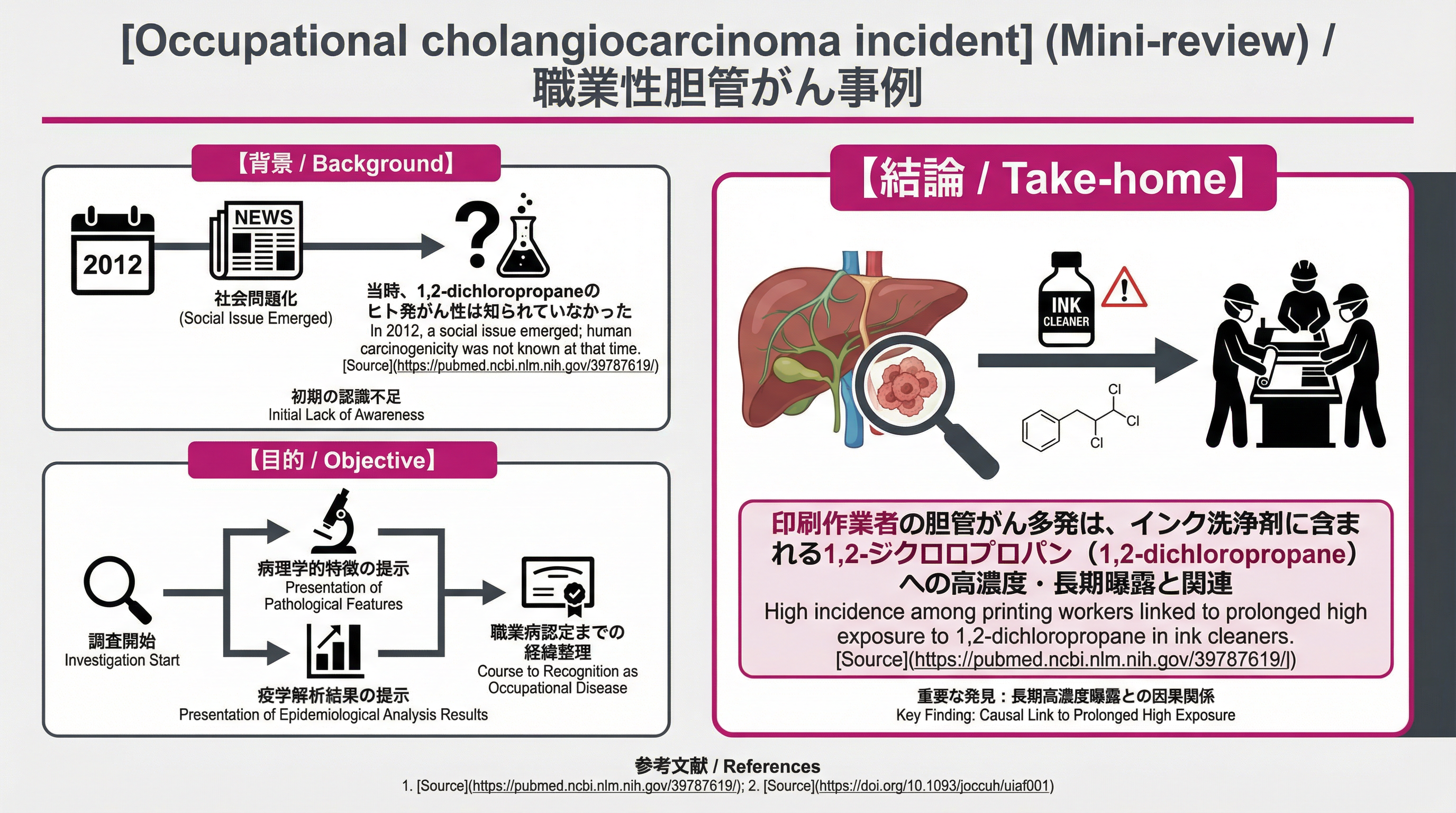
In 2012, Japan was shaken by a troubling discovery: several young workers at a small printing company developed a rare and deadly cancer of the bile ducts, known as cholangiocarcinoma. Many of them were only in their 20s to 40s—an age group in which this cancer is extremely uncommon. Could their workplace be the cause? This question triggered an investigation that would eventually reshape occupational health policies.
Researchers traced the cases to prolonged exposure to 1,2-dichloropropane (1,2-DCP), a chemical used to clean printing inks. At the time, this substance was not known to cause cancer in humans. However, epidemiological analyses revealed a clear pattern: workers with higher cumulative exposure to 1,2-DCP were far more likely to develop cholangiocarcinoma. This dose–response relationship provided strong evidence that the chemical itself was responsible.
Pathological studies also showed distinctive features of this occupational cancer, helping researchers better understand how chemical exposure can damage the bile ducts and trigger tumor development. The findings were significant not only for science but also for worker protection. As a result of this incident, Japan strengthened regulations on hazardous chemicals in the workplace. Internationally, the International Agency for Research on Cancer (IARC) later classified 1,2-DCP as carcinogenic to humans (Group 1).
This case reminds us that the workplace can sometimes hide invisible dangers. By uncovering the link between a common industrial solvent and cancer, this research helped prevent future tragedies and highlighted the critical role of occupational health science in protecting workers’ lives.
Link to original journal article:
https://academic.oup.com/joh/article/67/1/uiaf001/7950814?searchresult=1
Title of the paper:
Occupational cholangiocarcinoma incident
Authors:
Shinji Kumagai