#MR003 A “Safer” Solvent That Wasn’t: The Hidden Health Risks of 1-Bromopropane
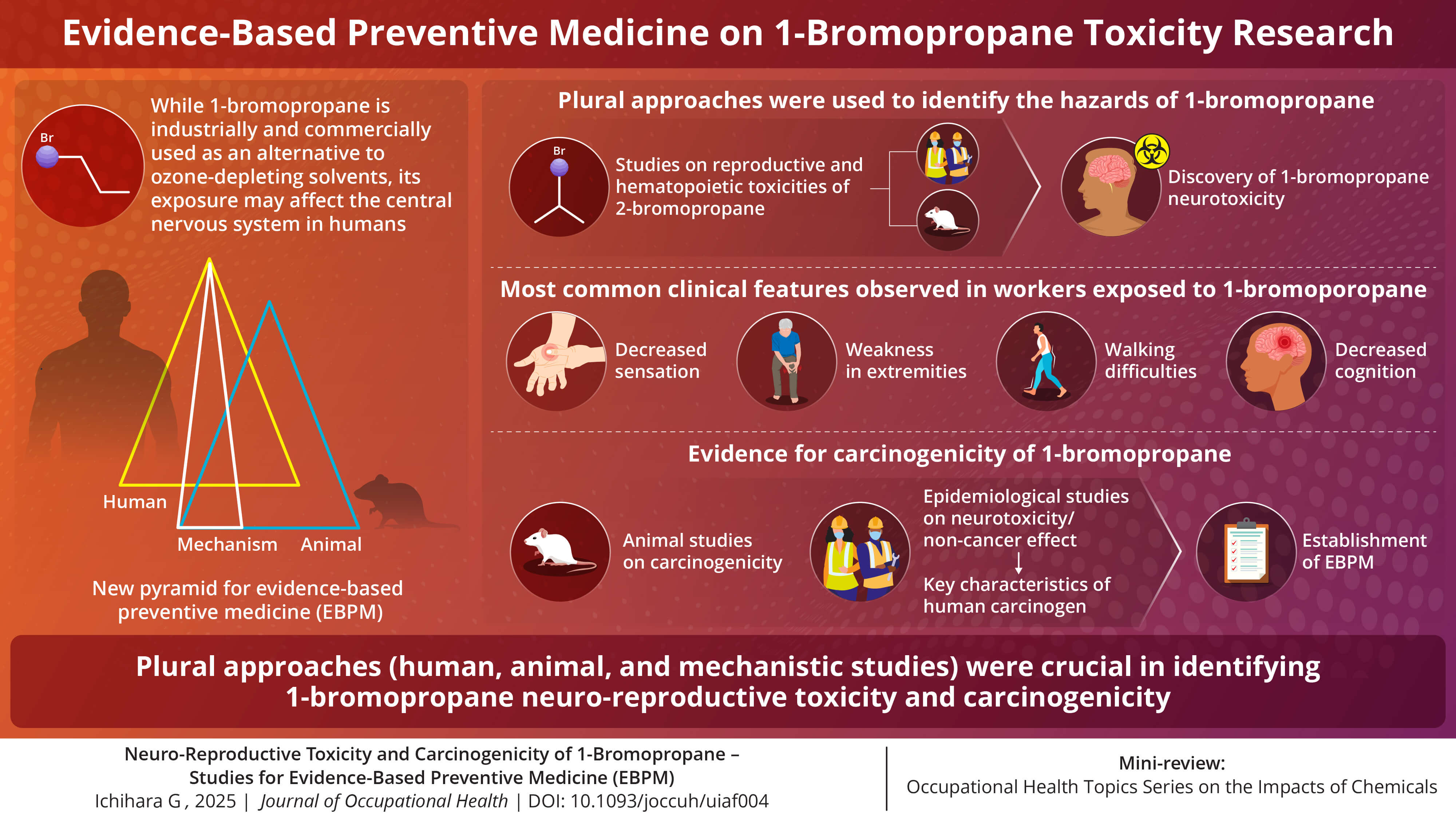
A “Safer” Solvent That Wasn’t: The Hidden Health Risks of 1-Bromopropane
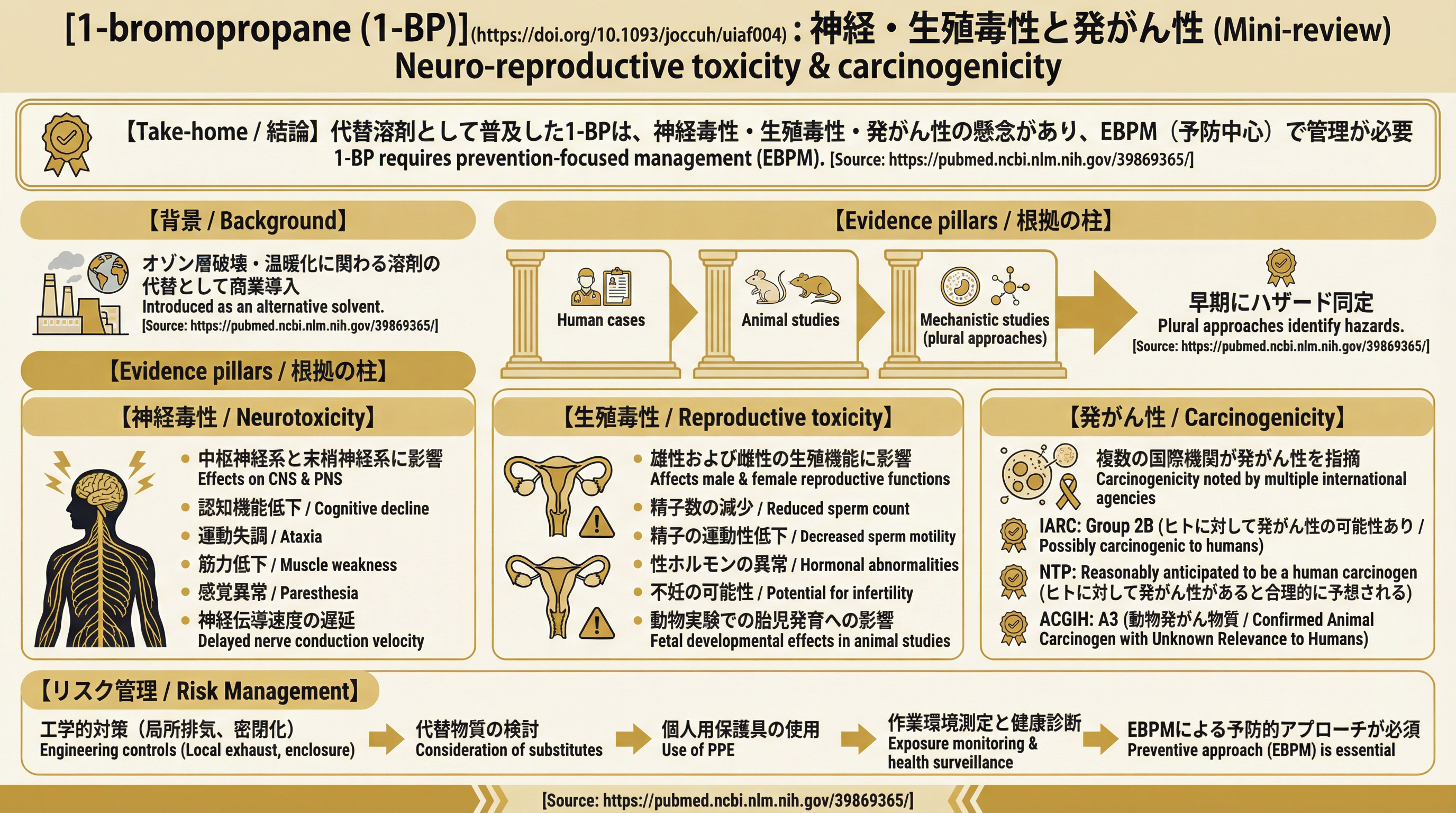
In the 1990s, industries around the world searched for alternatives to chemicals that damage the ozone layer. One promising replacement was 1-bromopropane, a solvent used in cleaning, metal processing, and electronics manufacturing. It was introduced as a safer option for both the environment and workers. But science soon began to tell a different story.
This article traces how researchers uncovered the health risks of 1-bromopropane through a combination of workplace observations, laboratory experiments, and mechanistic studies. The story began when unusual health problems appeared among workers exposed to related chemicals. Earlier cases involving 2-bromopropane had already caused severe reproductive disorders among workers in an electronics factory, raising concerns about similar compounds. Subsequent research revealed that 1-bromopropane can damage the nervous system, causing symptoms such as numbness, weakness, walking difficulties, and cognitive problems in exposed workers.
Animal experiments helped confirm these risks. Studies showed that exposure to the chemical could damage nerve fibers in the brain and alter protein expression in areas linked to learning and memory. Researchers also discovered harmful effects on male reproductive cells and evidence suggesting possible cancer-related mechanisms.
What makes this case especially important is how the evidence was built. Instead of relying on a single type of study, scientists combined human case reports, animal research, and molecular analyses to reveal the full picture of risk. This “multiple-approach” strategy highlights a new direction for evidence-based preventive medicine, where protecting workers requires integrating different types of scientific evidence.
The lesson is clear: even chemicals introduced as safer alternatives can carry unexpected dangers. By learning from these discoveries, occupational health science can better anticipate risks—and help ensure that the next “replacement” chemical truly protects both workers and the environment.
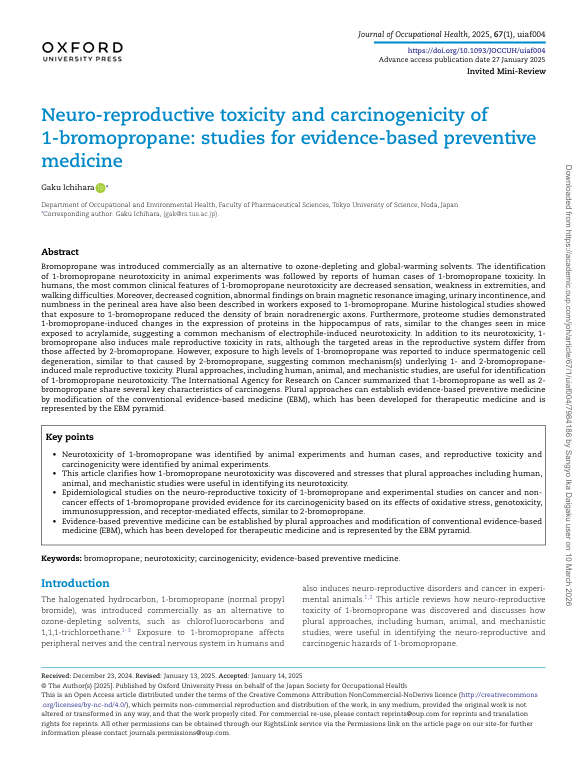
Link to original journal article:
https://academic.oup.com/joh/article/67/1/uiaf004/7984186?searchresult=1
Title of the paper:
Neuro-reproductive toxicity and carcinogenicity of 1-bromopropane: studies for evidence-based preventive medicine
Authors:
Gaku Ichihara